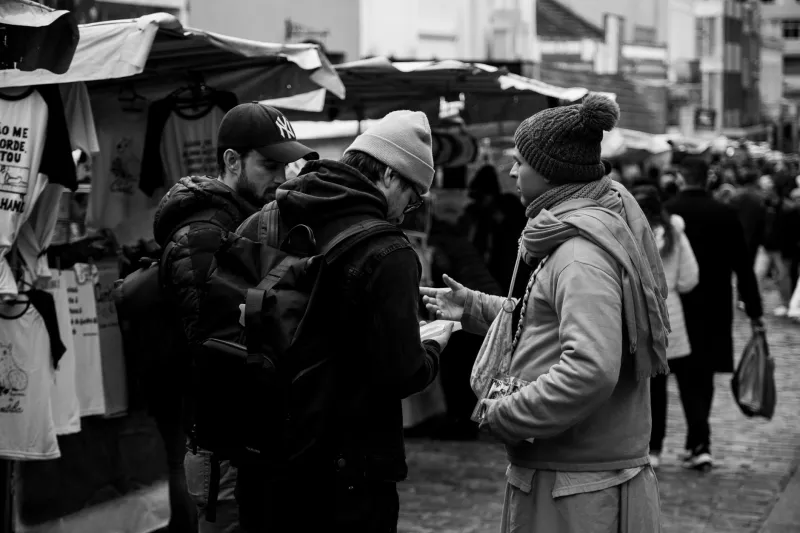
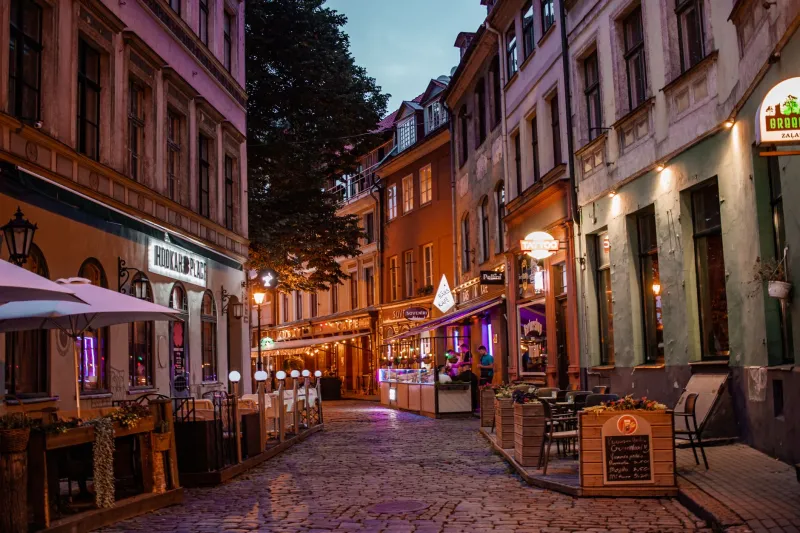
Your First Hour in a New Place Is the Whole Trip in Miniature — Here's How to Use It
There's a version of arrival that most of us know by heart. You land, you wait for your bag, you argue briefly with a rideshare app, you check in, you collapse on a bed that smells like someone else's laundry detergent, and then — somewhere around the second hour — you finally look up and think: okay, I'm here.
But you were here an hour ago. You just weren't paying attention.
That first hour is a window that doesn't stay open long. The place is still strange enough to surprise you. Your senses are heightened, even if jet lag is working against you. You haven't yet built the mental map that will eventually make the unfamiliar feel routine. There's a quality of attention available to you right now that won't be there tomorrow, and definitely won't be there by day four.
How you spend it matters more than most travel advice will ever tell you.
Why the First Hour Has a Different Quality of Light
Psychologists have a term for it: the novelty response. When your brain encounters a genuinely new environment, it shifts into a higher gear of perception. Colors seem more saturated. Sounds register more sharply. You notice things — a specific smell, the way people are dressed, the rhythm of foot traffic — that you'd completely filter out back home.
This is the state that makes travel feel alive. And it's most intense in the very first moments of arrival.
The problem is that most of us immediately start managing logistics during exactly this window. We're staring at Google Maps, texting the hotel, mentally rehearsing how to ask for a taxi. We're processing the new place rather than receiving it. By the time we've sorted out the practical stuff, a little bit of that sharpness has already faded.
The travelers who seem to connect most deeply with the places they visit — the ones who come back with stories that feel genuinely different from the standard tourist reel — tend to do something specific in that first hour. They treat it like a ritual rather than a chore.
The One-Café Rule
Here's a simple practice worth stealing: before you do anything else, find a place to sit and order something local.
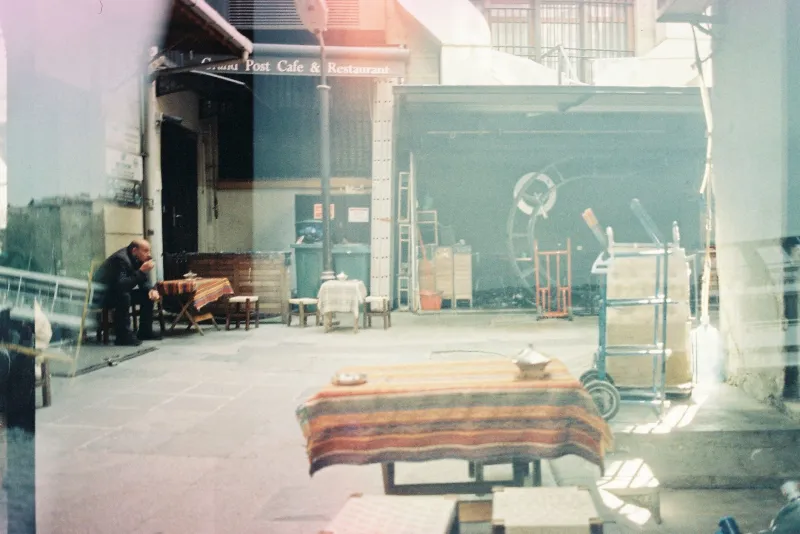
Not Starbucks. Not the airport Chili's. Somewhere that is of the place. A corner café, a street-side juice stand, a bakery that's been open since before your parents were born. Sit down. Order without overthinking it. Then put your phone face-down on the table.
What you're doing isn't really about the coffee or the pastry. You're giving your nervous system permission to land. You're creating a small, intentional pause between the transit version of yourself — the one who's been in survival mode since the security line — and the traveler you actually want to be.
This works whether you're arriving in Oaxaca or Osaka, New Orleans or Nairobi. Every place has somewhere to sit and something worth tasting within a short walk of wherever you arrive. That first sip of something local is a handshake with the destination. It's your body saying: we're here now. Let's pay attention.
Walk Before You Navigate
After the café, resist the pull of the itinerary for just a little longer. Before you plot a course to your hotel or your first scheduled stop, take a fifteen-minute walk with no destination.
Not a purposeful walk. Not a sightseeing walk. Just movement through the place, with your eyes open and your phone in your pocket.
This does something specific. It gives you a felt sense of the neighborhood's texture — the pace people move at, whether eye contact is common or rare, how the architecture transitions from block to block, what the air actually smells like (which is always different from what you expected). You're building a sensory baseline that will inform everything you experience for the rest of the trip.
Think of it like tuning an instrument before you play. You wouldn't skip that step and then wonder why everything sounds slightly off.
Silence Is Underrated
One more thing worth considering: find a few minutes of genuine quiet somewhere in that first hour.
This sounds almost absurdly simple, but it's surprisingly rare. Most travelers are immediately filling the new environment with noise — podcasts, music, phone calls home to report that they've landed safely. All of that is fine, but it does create a kind of buffer between you and the place.
Finding a bench, a quiet corner of a park, or even just a spot outside a building where you can stand still for five minutes and listen — to the specific ambient sound of this city, this town, this stretch of coast — is a way of letting the place speak first.
Every destination has its own sonic signature. Buenos Aires sounds different from Bangkok. Rural Vermont sounds different from rural Montana. That sound is part of the place's identity, and you can only really hear it before you've gotten used to it.
What This Actually Changes
You might be reading this thinking: I didn't fly nine hours to sit in a café and take a quiet walk. I have things to see.
Fair. But here's the thing — travelers who build intentional arrival practices don't end up seeing less. They end up seeing more, in the sense that actually matters. They're more likely to notice the unexpected thing. More likely to have a real conversation with someone local. More likely to deviate from the itinerary in a direction that turns out to be the best part of the trip.
The ritual of arrival isn't about slowing down. It's about calibrating. It's the difference between showing up somewhere and actually arriving.
Carmelita Tours was built around the idea that travel is something you do with your whole self, not just your calendar. The destinations we love most are the ones that changed how we thought about something — about a culture, a place, ourselves. And almost every time someone tells us about a trip that genuinely moved them, the story starts somewhere in that first hour.
Not at the landmark. Not at the restaurant reservation. In a small, unhurried moment right after they landed, when everything was still new and they had the good sense to just let it be.
Go find your café. Put your phone down. Let the place say hello first.