When You Stop Counting the Days: Recognizing the Moment a Place Becomes Yours
The Moment Nobody Talks About
Travel writing loves momentum. The next destination, the tighter connection, the aggressive itinerary that somehow squeezes four countries into nine days. We celebrate the traveler who moves—who collects experiences like passport stamps and comes home with stories stacked like carry-on luggage.
But there's a quieter thing that happens sometimes, and it almost never makes the highlight reel.
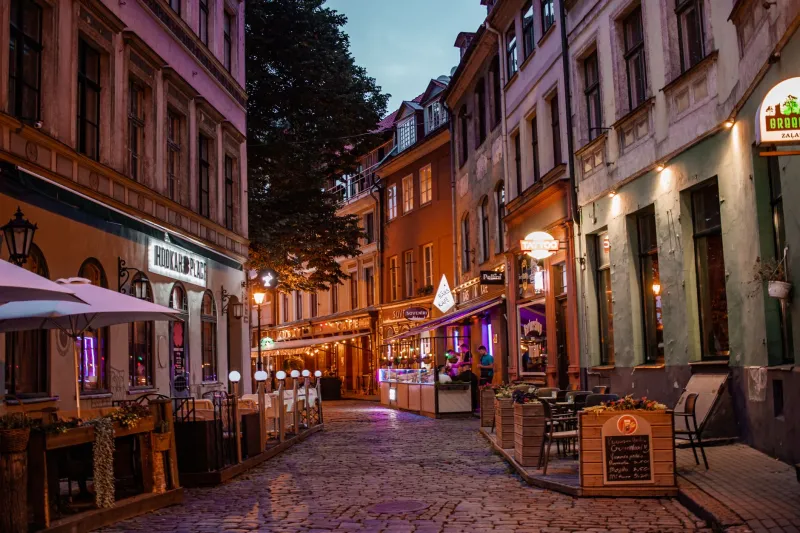
You're sitting somewhere—maybe a corner café in a neighborhood you wandered into by accident, maybe a bench overlooking a square you've now crossed a dozen times—and you realize you've stopped performing the role of tourist. You're not photographing anything. You're not consulting your phone. You're just... there. Breathing. Belonging, in some loose and temporary way, to the place around you.
That's what we're calling the Stillness Test. And learning to recognize it might be one of the most underrated skills in travel.
What the Stillness Test Actually Measures
It's not about being calm or relaxed—plenty of people feel calm on a beach vacation without ever truly arriving somewhere. The Stillness Test is about something more specific: the moment a destination stops being a backdrop and starts being a context.
When you're in tourist mode, a city is a series of things to see. Streets are connective tissue between attractions. Locals are ambient. You're watching the place like a film.
When you've passed the Stillness Test, you're inside the film. You notice the rhythm of the neighborhood—when the streets get loud, when they go quiet, which vendor is always there and which one only shows up on weekends. You have preferences now. You have a usual order at a place. You might even feel mildly territorial about your corner of the square.
None of this requires weeks. It can happen in three days. It can happen in one, if the conditions are right.
The Physical Signs Are Real
Here's something worth paying attention to: the Stillness Test has a physical component. Your body actually registers when you've arrived.
The shoulders drop. The jaw unclenches. You stop walking at that slightly-too-fast tourist pace—the one that signals I'm covering ground, I'm being efficient, I'm not lost even though I might be lost. You slow down to the speed of the people around you, and it doesn't feel like giving up. It feels like fitting in.
Your appetite changes, too. Early in a trip, food is often another box to check—the famous dish, the well-reviewed restaurant, the thing you read about before you left home. Once you've passed the Stillness Test, you eat because you're hungry, from wherever looks good right now, without needing it to be a story.
Sleep is different. The first night somewhere new is almost always restless—new sounds, new darkness, the ambient hum of an unfamiliar place. The night after you've passed the Stillness Test, you sleep like you live there.
Why Some Places Pass the Test and Others Don't
Not every destination will do this for every traveler. That's not a failure—it's information.
Some places are genuinely better suited to passing you through than holding you still. Major tourist hubs, even beautiful ones, are often engineered for movement. The infrastructure of over-visited places—the lines, the crowds, the relentless signage pointing you toward the next thing—can make it nearly impossible to settle. You're always being directed somewhere else.
Other places have a different gravity. Smaller cities. Neighborhoods that haven't been fully discovered yet. Towns where the infrastructure was built for people who live there, not people passing through. These are the places that tend to activate the Stillness Test fastest, because they're not performing for you. They're just going about their business, and you either join in or you don't.
For American travelers especially, there's a tendency to conflate the size of a destination with its value. New York, Paris, Tokyo—the big names carry enormous cultural weight, and there's nothing wrong with wanting to see them. But if you've only ever traveled to marquee destinations, you may have never actually experienced the Stillness Test at all. The smaller, less-choreographed places are often where it lives.
How to Stop Missing It
Most travelers blow past the Stillness Test without noticing because they've already booked tomorrow. The itinerary is the enemy of arrival—not because planning is bad, but because a packed schedule keeps you in perpetual forward motion, which is the exact opposite of what the Stillness Test requires.
A few things that help:
Leave gaps. Seriously unscheduled time, not "free time" that you'll inevitably fill with more sightseeing. Time where the only rule is that you can't go to anything on a list.
Return to the same place twice. A second visit to the same café, the same street, the same viewpoint does something that a first visit can't. Familiarity is the precondition for belonging.
Pay attention to resistance. If you find yourself reluctant to leave a particular neighborhood to go check off the next landmark, that resistance is the Stillness Test knocking. Don't ignore it.
Watch what you stop photographing. There's a curious thing that happens when a place starts to feel like yours—you stop documenting it as aggressively. You don't need proof you were there in the same way, because it doesn't feel like a trophy anymore. It feels like a place you know.
What It Changes
Once you've experienced the Stillness Test—really felt it, recognized it for what it is—you start making different decisions as a traveler.
You book fewer destinations per trip. You give yourself more time in each place. You start choosing based on feel rather than fame, which often means you end up somewhere genuinely surprising. You come home with fewer photographs and more memories, which sounds like a cliché until it happens to you and you realize it's just true.
You also get harder to impress in the shallow sense, and easier to impress in the deep one. A stunning Instagram backdrop starts to matter less. A morning where you felt completely, temporarily at home somewhere on the other side of the country—or the world—starts to matter more.
That's what we're after, really. Not the trip that looks the best from the outside. The trip that felt like something on the inside.
The stillness is where that lives.