Pack Light, Remember Everything: The Case Against Buying Stuff When You Travel
Somewhere in a closet in suburban Ohio, there's a woven basket from Oaxaca sitting next to a ceramic lighthouse from Maine and a shot glass from Las Vegas that nobody has ever used for shots. Sound familiar? Most of us have a version of this closet. A graveyard of good intentions, where the things we bought to remember a place have quietly become the things we never look at.
Here's the uncomfortable truth: most souvenirs don't actually help you remember. They just give you something to do in the gift shop.
So what does work? What actually brings a trip back to life six months, five years, twenty years later? Turns out, it's almost never the thing you paid forty dollars for.
The Problem with Objects
The souvenir industry is built on a very human anxiety — the fear that if we don't grab something physical, the experience will slip away. And there's something real in that fear. Trips do fade. The specific smell of a market in Marrakech, the exact quality of afternoon light in Savannah, the sound of rain on a tin roof in Vietnam — these things blur faster than we expect.
But buying a magnet doesn't stop that from happening. What it does is give you a proxy memory, a stand-in that says I was there without actually taking you back. The object becomes the memory instead of the experience. And that's a trade-off most of us make without even realizing it.
The good news is that there are better trades available.
Write It Down Before You Forget It
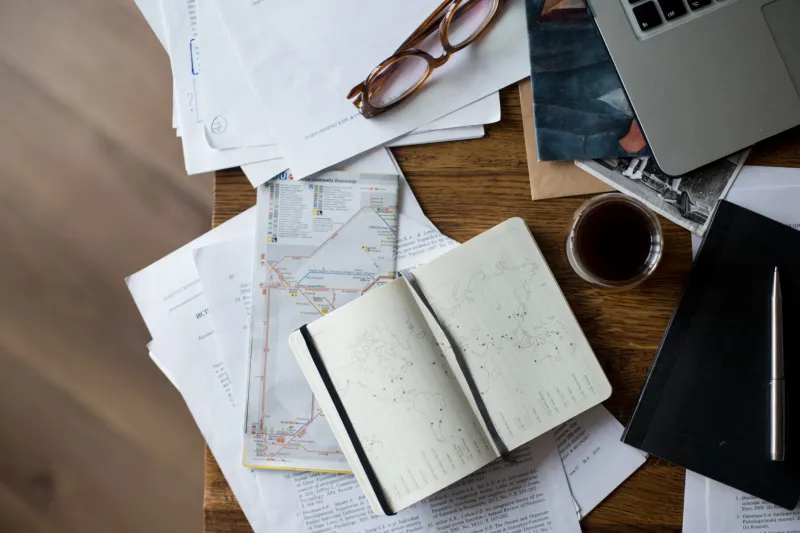
Journaling has a reputation problem. People hear the word and picture a leather-bound diary full of earnest feelings. But travel journaling doesn't have to be that. It can be three sentences scribbled on a napkin. It can be a running note in your phone. It can be a voice memo recorded on a park bench while the moment is still warm.
The goal isn't literature — it's specificity. The more concrete the detail you capture, the more powerfully it will pull you back later. Don't write the food was incredible. Write the guy at the taco stand had a handwritten price list taped to a cooler, and he gave me extra salsa without asking because he could tell I wanted it. That's the detail that puts you back on the street corner.
Even a five-minute habit at the end of each day — just jotting down the three most unexpected things that happened — can create a record that outlasts any souvenir shelf.
Photograph Like You're Making a Documentary
Everyone takes photos when they travel. But most travel photography is aimed at landmarks, not life. We point the camera at the Eiffel Tower and forget to photograph the café where we sat for two hours watching the rain. We get the Grand Canyon at sunrise and miss the ranger who told us a story about a condor she'd been tracking for years.
Try shifting your lens toward the incidental. The menu written in chalk. The dog sleeping in the doorway of a shop. The particular way the light came through the curtains in your rental apartment at seven in the morning. These are the images that will actually transport you — because they're yours, not everyone's.
Audio works even better for this than most people realize. The ambient sound of a busy street market, a snippet of live music from a bar you wandered past, the particular acoustic of a cathedral — your phone can capture all of it. Sounds have a way of bypassing your brain and going straight to your gut. A thirty-second recording of a rainstorm in New Orleans will do more for your memory than almost anything you could have bought on Bourbon Street.
Collect the Ephemeral Stuff
Some of the best no-cost souvenirs are the things that were never meant to be kept. A transit ticket from the Tokyo subway. A receipt from a tiny restaurant in Charleston with a handwritten note on the back. A local business card with a logo so perfectly designed you can't throw it away. A dried flower from a farmer's market. A pressed leaf from a trail in Vermont.
These things are free, they weigh almost nothing, and they carry an authenticity that manufactured souvenirs can't touch. They're artifacts of an actual moment, not mass-produced approximations of one.
A simple envelope or a small notebook where you tuck these flat items as you go can become one of the most evocative travel keepsakes you'll ever own — and it fits in your jacket pocket.
Bring the Place Home Through Food
This one takes a little more effort but pays off for years. When you eat something extraordinary on a trip, try to find out how it's made. Ask your server. Look for a local cookbook. Take a cooking class if you have the time. The recipe itself becomes a portal.
Making that dish back home — even an imperfect version — recreates the experience in a way that no object can. The smell of sofrito in your kitchen in Denver will take you back to Puerto Rico faster than any piece of pottery. Food is memory in a way that's almost chemical.
If you can't get the recipe, at least get the ingredient. A small bag of a spice blend, a local hot sauce, a bottle of olive oil from a market in Greece — these are souvenirs that actually get used, and every time you reach for them, you're back.
The Memory You Don't Need to Carry
There's a version of travel where you come home lighter than you left — not just in your luggage, but in your head. No anxiety about whether the thing you bought was worth it, whether it'll survive the flight, whether you'll actually display it. Just the clean, portable weight of experience.
The traveler who journals, photographs the small stuff, records ambient sound, pockets a transit ticket, and recreates a dish at home has built a richer archive than the traveler who spent three hundred dollars in gift shops. And they did it without checking a bag.
The best souvenir from any trip is the one that lives in your body — in the way you now instinctively order coffee, or the phrase in another language that you can't quite forget, or the memory of a stranger's face that made you see your own city differently when you got home.
You can't buy that at the airport. But you can absolutely bring it back.