Stop Asking Where to Eat. Start Asking This Instead.
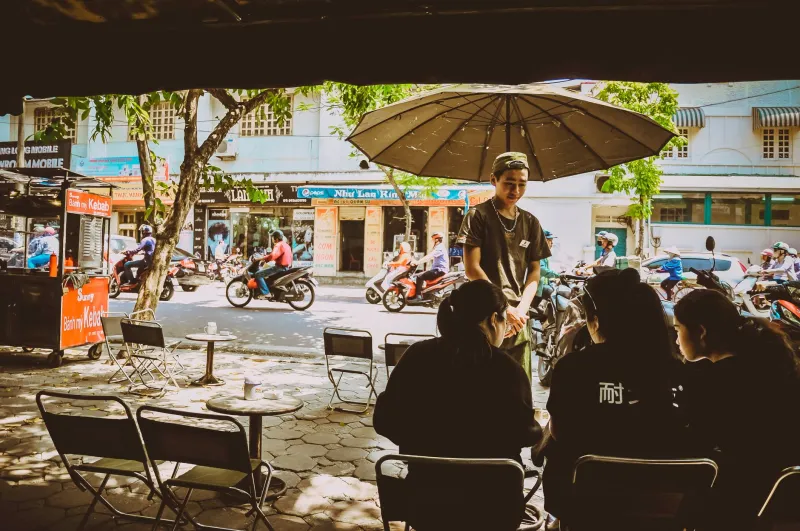
You've just arrived somewhere new. Maybe it's a small city in the Texas Hill Country, a coastal town in Portugal, or a neighborhood in Osaka you've never heard of. You end up in a conversation with someone who actually lives there — a shopkeeper, a guesthouse owner, the person sitting next to you at the counter. And almost reflexively, you ask: So, what's the best restaurant around here?
It's not a bad question. But it's probably the least interesting one you could ask.
The thing about that question — and all its cousins, like what should I see or is there a good market nearby — is that it treats the person in front of you as a search engine. A warm, human Google Maps. You'll get an answer, maybe even a great one, but you'll leave the conversation knowing exactly as much about this place as you did before you sat down.
There's another way to do this. And it starts with asking questions that actually require a person to think.
Ask About the Rhythm, Not the Roster
Every place has a pulse — a daily rhythm that most visitors never notice because they're too busy hitting the highlights. The best way to feel that rhythm is to ask about it directly.
Try something like: What does a normal Tuesday look like for you here? Or: What time do people actually eat dinner in this town? These questions sound almost too simple, but they unlock a kind of local knowledge that no guidebook captures. You'll find out whether this is a place that comes alive at noon or midnight, whether Sunday mornings are sacred or just sleepy, whether the neighborhood you're staying in shifts character entirely after 6 p.m.
When you understand the rhythm of a place, you stop being a tourist moving through a set of attractions and start being someone who actually inhabits it — even briefly.
Ask What's Changing
This one is underused and almost always fascinating: What's different about this place than it was five years ago?
Every city, every town, every block is in the middle of a story. Development, displacement, new arrivals, old businesses closing, something unexpected taking root. When you ask what's changing, you invite someone to tell you that story — and you'll almost always hear something that reframes everything else you're seeing.
A local in a gentrifying neighborhood in Nashville might tell you about the longtime residents who've been pushed out. Someone in a small fishing village might explain how tourism has been both a lifeline and a complication. A shopkeeper in a mid-sized Midwestern city might describe a slow, quiet revival happening street by street. These aren't stories you came looking for, but they're often the ones that stick with you longest.
Ask About the Thing They Can't Stop Thinking About
Here's one that feels almost too personal, but rarely lands that way: What are people around here really fired up about right now?
Not politically, necessarily — though sometimes that's part of it. What's the local debate? The community argument? The thing that comes up at every dinner table? It might be a proposed highway bypass, a beloved institution under threat, a land-use decision that's splitting the town in half. Whatever it is, it's a window into how this community sees itself and what it actually values.
When you know what people care about, you start noticing it everywhere — in the flyers on telephone poles, the letters to the editor in the free weekly paper, the conversations happening just out of earshot at the next table over. You're no longer a spectator. You're a little bit inside the place.
Ask About the Neighborhood's History — Specifically, What It Used to Be
What was this block before all this? is one of the most reliable conversation-starters in any traveler's toolkit. People who've lived somewhere for a while almost always have a vivid memory of what used to occupy a space, and they're usually happy to share it.
That coffee shop? Used to be a hardware store that the owner's grandfather ran for forty years. That parking lot? Once a dance hall. That quiet residential street? A commercial corridor that dried up when the highway bypassed town in the '70s. These micro-histories don't show up on any tour, but they add a kind of depth to a place that makes everything you see feel more real.
Bonus: this question often leads to introductions. Oh, you want to know about that? You should talk to Maria — she's lived here her whole life and knows everything.
Ask What They Wish More Visitors Understood
This is the one that tends to produce the most honest answers, and sometimes the most surprising ones.
Is there anything you wish tourists knew before they showed up? Or, softer: Is there anything about this place that you feel like most visitors miss?
Sometimes the answer is practical — don't rent a car, the parking is impossible; the waterfront is beautiful but the real neighborhood is three blocks inland. Sometimes it's cultural — there's a way of doing things here that visitors often get wrong, and it matters to people. And sometimes it's almost philosophical: I wish they knew this place has a real community. We're not just a backdrop for someone's vacation photos.
That last kind of answer is a gift. It's an invitation to be a better visitor — and a reminder that the places we travel to are not sets or stages. They're someone's actual life.
The Underlying Shift
None of these questions require you to be a journalist or an extrovert or someone with a particular gift for conversation. They just require you to be genuinely curious about a person rather than their usefulness to your itinerary.
The difference between asking what's the best restaurant and asking what's changing around here is the difference between treating someone as a resource and treating them as a person. One transaction ends when you get the name of a place. The other can go almost anywhere.
And here's the practical upside, if you need one: the experiences that come out of real conversations — the invitation to a family gathering, the after-hours tour of a workshop, the introduction to someone who becomes a genuine friend — are the ones you'll still be telling stories about ten years from now. No algorithm surfaces those. No five-star review leads you there.
They come from asking the right question at the right moment. Which, it turns out, is almost any question that treats a place as something worth understanding rather than something worth photographing.
Show up curious. Ask something real. See what opens up.