Read the Shelves, Not the Brochure: A Grocery Store Is the Fastest Way Into a New City
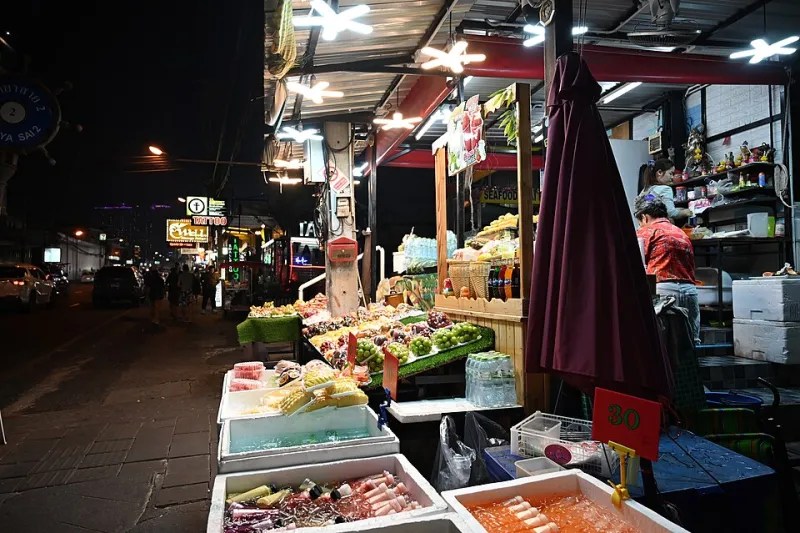
Photo: PattayaPatrol, CC BY-SA 4.0, via Wikimedia Commons
You have maybe thirty-six usable hours in a city you've never seen, and the internet has already handed you the same eleven photographs everyone else got. The cathedral. The mural. The brunch place with the line around the corner. Here's a less photogenic recommendation: before all of that, walk to the grocery store.
Not the boutique provisioner near your hotel with the eleven-dollar olive oil and the hand-lettered chalkboard. The store where people buy milk on a Tuesday. In most American cities that means a regional chain or a neighborhood market — an H-E-B in Texas, a Publix in the South, a Wegmans in upstate New York, an H Mart or Patel Brothers or 99 Ranch in any city with a real immigrant footprint. Those places are open archives of what a region grows, celebrates, and quietly argues about.
The store is a map nobody prints anymore
A visitor center tells you what a city wants you to know. A grocery store tells you what it actually eats.
Shelf space is expensive, and nobody gives it away out of nostalgia. So when you see an entire aisle devoted to dried chiles, or a refrigerated case with nine kinds of sauerkraut, or a bakery counter selling out of one specific roll by 10 a.m., you're reading a real economic argument about who lives here and what they refuse to do without. Prices tell you what's a staple and what's a treat. Signage tells you which languages the neighborhood thinks in. The seasonal endcap tells you what month it is in a way that a calendar never quite does.
You can learn more in fifteen minutes in the produce section than in an hour of scrolling.
Forty-five minutes, three laps
Treat it like a museum with carts. Go in with a loose plan, stay out of people's way, and don't overstay.
Lap one: the perimeter
Start where the fresh stuff lives — produce, bakery, deli, meat and seafood. What's abundant and cheap? That's the local harvest, whatever the calendar claims. What's priced like a luxury? That's what people here grew up wanting. Look at the bags of dried peppers, the size of the tortilla selection, the number of frozen-dumpling brands, the tub of something you cannot identify with a label in two languages. Grab a basket. You'll want it later.
Lap two: the aisles that tell the truth
Now the middle of the store, which is where a region keeps its habits:
- The spice and international aisle. Which cuisines get the most shelf? A dedicated section the size of a minivan is not an accident.
- The soda and snack aisle. Regional soft drinks are little flags: Cheerwine in the Carolinas, Moxie in New England, Big Red in Texas, Ale-8-One in Kentucky. Buy one. Drink it warm if that's how the label suggests.
- The refrigerated case. Local dairy, regional cheese, a brand of butter you've never heard of that costs more than your lunch. That's pride, priced.
- The endcap. Whatever's being pushed hard right now — king cake in south Louisiana in January, green chile everything in New Mexico in fall, cranberry products in New England in November. This is your seasonal calendar, printed on cardboard.
Lap three: the checkout line
This is the part people skip, and it's the best part. Read the magazine rack like a local newspaper index. Note the community bulletin board — the free paper, the church rummage sale, the flyer for a tamale fundraiser. Listen. Someone in that line will have an opinion about a restaurant, and it will be better than the one you read online.
Buy something. Buy small. Buy weird.
Here's the etiquette, because a grocery store is somebody's workplace and somebody's kitchen, not a diorama.
Spend money. You're not owed a cultural experience for free. A bag of local coffee, a jar of something pickled, a pastry from the bakery case — that's your admission ticket and your souvenir in one.
Don't photograph people. Ask before you photograph a display. Skip the wide-angle shot of the whole aisle; you'll never look at it again, and it makes you look like a person who wandered in from a tour bus.
Ask questions, but read the room. "How do you use this?" is a great question. "What is this weird thing?" is not. Cash helps in small markets, and a tote bag helps everywhere. Don't block the aisle with your cart and your wonder. If there's one left of something, leave it.
The checkout line is the visitor center
You will forget the plaque text. You will forget the name of the building with the famous staircase. You will not forget the woman in line who told you, with real urgency, to buy the green salsa and not the red, or the guy outside who argued with his brother about the best tamales in town and then told you exactly where to go.
That's the thing about starting at the grocery store. It's not a stop on the itinerary. It's the key you use for everything that comes after — you'll recognize the bread on a menu, understand why the town shuts down for one weekend in fall, and know which neighborhood to walk through at dinnertime.
Forty-five minutes. One basket. Then go see the cathedral, and see it better.