Grandma Didn't Need Points: What the Old Vacation Album Knows That We Forgot
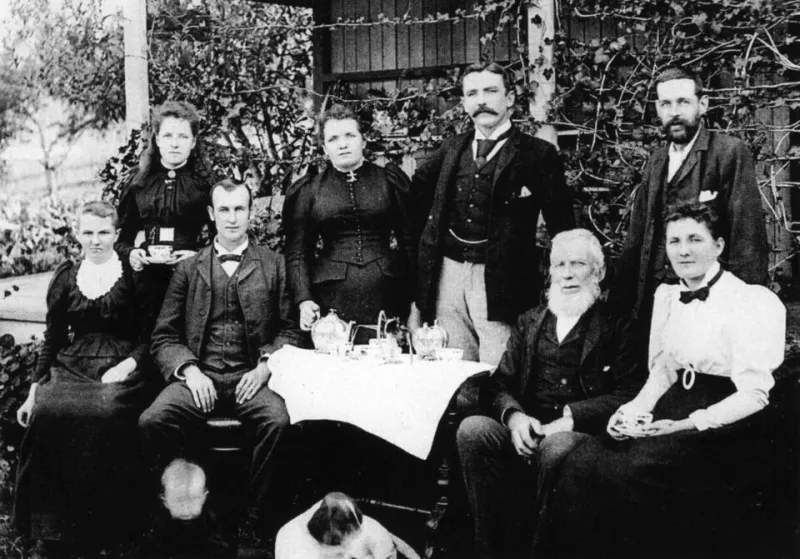
Photo: State Library of Queensland, Australia, No restrictions, via Wikimedia Commons
I spent a rainy Sunday last fall going through my grandmother's vacation albums — the kind with the sticky pages and the yellowing photos, captions written in careful cursive. Yellowstone, 1962. Ozarks, 1958. A diner in Amarillo whose neon sign she photographed like it was the Eiffel Tower.
And somewhere between the third album and the second cup of coffee, I realized something uncomfortable: my grandmother, who never set foot on an airplane, took better trips than I do.
Not longer. Not more exotic. Better. As in, more memorable, more restorative, more obviously hers. And the more I thought about it, the more I wondered if we've been optimizing travel in the wrong direction for thirty years.
The Mid-Century Trip Wasn't Primitive. It Was Edited.
We tend to picture the American family vacation of the 1950s and '60s as a hardship — five kids in a station wagon, one motel, a cooler of bologna sandwiches. But look at what those trips actually contained: a single destination, often within a day's drive. A week, not a long weekend. No itinerary to speak of. And a built-in understanding that the drive was the vacation, not an obstacle between you and one.
My grandmother's albums show it clearly. The photos aren't of landmarks, mostly. They're of the lodge porch at dusk. The diner booth. The kids asleep in the back seat. She wasn't documenting achievement. She was documenting time — unhurried, unoptimized, unshared.
Contrast that with the modern trip: six flights stitched together on points, a spreadsheet of must-eats, a camera roll of 900 photos we'll never open again. We've made travel more ambitious and less memorable at the same time. The album knows something we don't.
What She Got Right
1. The road trip as the destination. Mid-century Americans understood that a drive through the Ozarks with the windows down is not dead time. It's the only time all week the whole family is in one place with nothing to do but talk. Modern travel treats transit as a problem to minimize. The old way treated it as the point.
2. The state park lodge. Before the resort industry convinced us that luxury means someone bringing us poolside drinks, America built lodges — CCC-era stone and timber affairs in places like Petit Jean, Starved Rock, and Old Faithful — where the entertainment was a fireplace, a dining hall, and a trailhead. They still exist. They still cost about what a chain hotel near an airport costs. They are still criminally underbooked.
3. The roadside diner. Not the revived, retro-styled one with the gift shop. The actual one, where the pie is homemade because it has to be, because the town is small and people would know. My grandmother photographed that Amarillo sign because the diner was an event — a place where strangers at the counter became the story of the day.
4. Going somewhere once and going deep. Her albums don't show repeat visits to fifteen countries. They show one trip a year, one region, thoroughly known. She could tell you the name of the lodge manager. I can't tell you the name of the last four hotel front desks I've stood at.
The Traditions Worth Reviving
If you want to steal her playbook, here it is:
- Pick a spot within a half-day's drive and stay the whole week. One unpacking. Zero airport security.
- Book the state park lodge or a family-run motor court. Look for the words "since 1938."
- Eat one meal a day at a counter, not a table. Talk to whoever's next to you.
- Bring a real camera — or print the photos after. The album is the point. A trip that never gets looked at again is a trip that half-happened.
- Let one full day have no plans at all. Her albums are full of those days, and they're the best pictures.
The Plot Twist
Here's what gets me. We chase miles and points and status so we can travel farther, more often, more cheaply. But my grandmother's albums suggest the variable that actually matters was never distance or cost. It was attention.
She paid attention to the drive, the diner, the porch, the people. That's it. That was the whole secret. And it didn't cost a single frequent flyer mile.
I'm not giving up my passport. But I've already booked a week at a stone lodge four hours from my house, and I bought a photo album — a real one, with sticky pages. Grandma would've approved.